
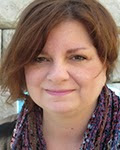
 Betsy Mowry Voss is the Arts Innovation Director at COMPAS, a community arts organization based in St. Paul, where she’s been for almost thirteen years. She holds a B.A. from Augustana College in Rock Island, IL in visual art and theater, and an M.A. in non-profit/arts administration from the St. Mary’s University in Minneapolis. With over 20 years in the non-profit sector, her current focus is in youth work, evaluation, artist training and creating accessible programming. Betsy’s creative practice and experience includes writing, painting, mosaic, and theater.
I’m a “Gen X’er” who enjoys social media. Sites like Facebook, Twitter, and LinkedIn make it possible for me to absorb what’s going on very quickly—and sometimes that’s all I seem to have time for! I work in the arts and like to stay tuned in to the work of artists and organizations I know, as well as events and social justice issues that affect the creative folks around me. I feel fortunate to have intentionally rooted myself in a culture that can be skeptical about life and malleable enough to make change. But, as much as I enjoy connecting with people on-line, technology also provides me with a stream of info that can be distracting, stressful, and often, inaccurate.
Fortunately, I’ve learned to scrutinize what I’m reading; this is key. As one of the humanities, the arts train us to dig deeper to understand the historical and modern-day context behind the work. We practice thinking critically and learn to appreciate people similar to and different from ourselves. The arts also remind us that very little is definitive. Through the humanities, I’ve developed thinking, interpretation, and comprehension skills. When I’m faced with the snapshots of life that social media offers, I use these skills to empathize and draw informed conclusions.
I believe social media should be looked at as a means and not an end. It’s a powerful method of reaching a lot of people, and it’s also the present day communication norm amongst teens. In my work with youth, I’m much more effective if I can meet them where they are—and that’s on-line and through digital communication. This isn’t to say that it should be the only way I communicate with them. But, let’s face it, the young people I connect with are much more likely to trust me if I can talk with them about something that’s such a big part of their lives.
Last year I listened to a news story where the expert mentioned how Socrates warned us that writing would be the downfall of humanity. This really struck me…writing? Yes, it has impacted our ability to memorize and to communicate. . .AND it has allowed us immeasurable advances. People will always be wary of change, but few of us can say we would be better off without writing. In the same way, I think it’s too soon for us to really know how on-line communications and social media will affect humanity.
As I work with young people, I think it’s important not to spend my time critiquing social media, but to do all that I can to help cultivate young people who will see (and want to see through) the superficial. I hope to help develop youth who can communicate, innovate, and think critically. These skills will encourage them to reflect and ask questions when they see posts and articles, and will promote ‘feet-on-the ground’ active leadership. In the end, isn’t that what we all hope for?


 Dave Wentzel is an Army National Guard Veteran from Mankato and a 2014 recipient of the Veterans’ Voices Award. He has worked to significantly improve the lives of Minnesota’s Veterans. Through his Wounded Warrior Program position with Congressman Tim Walz’s office, Wentzel has become a strong advocate at the local, state, and federal level for Veterans’ affairs and awareness of their mental health issues as a Veterans Constituent Advocate.